To see the introduction of this post series, please go to Part 1.
PART 2 is about the fig tree, Jesus cleansing the Temple area, and His teachings in that week (e.g. Sunday to Tuesday/Wednesday).
Sunday –
(This is usually considered “Palm Sunday”, the day of the Triumphant Entry. However, some people, like ourselves, now would think of that event as taking place on Saturday. Part 1 has my other comments about the Triumphant Entry on it so if you haven’t read that post, here is that link again.)
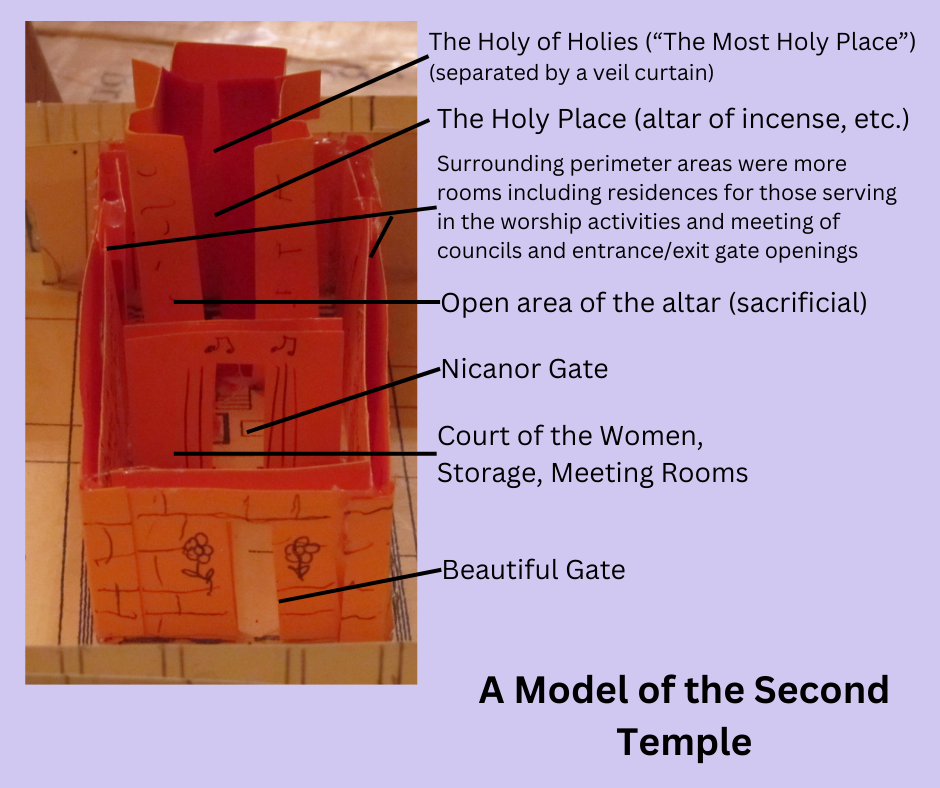
“The next day” (after the Triumphal Entry), Jesus went back to the Temple, drove out animals and disturbed business.
Recall from Part 1, that on the same day of the Triumphant Entry, Jesus went into the Temple area and simply looked around and then went out because it was getting closer to evening. So the first time Jesus was in the Temple that weekend was not the cleansing of the Temple. That cleansing happened the “next day”, according to Mark. We understand that “next day” to be a Sunday, when business would have resumed again because the Sabbath would be over for another week.
“Then those who went before and those who followed cried out, saying: “Hosanna! ‘BLESSED IS HE WHO COMES IN THE NAME OF THE LORD!’ Blessed is the kingdom of our father David That comes in the name of the Lord! Hosanna in the highest!” And Jesus went into Jerusalem and into the temple. So when He had looked around at all things, as the hour was already late, He went out to Bethany with the twelve.” Mark 11:9-11 NKJV
About the Fig Tree
Figs are considered an “ever-bearing” kind of fruit.
On His way to the Temple (Mark 11:12-15) that “next day” (Sunday), Jesus and His disciples stopped by a fig tree, looking for the little fruit buds which were a common food at that time of year for people to nibble on.
Figs grow fruit that would be available both at that time, as well as weeks later with secondary fruit (which is more-so their season).
Jesus spoke to the fig tree about not bearing fruit again. (They saw the fig tree again the following day too and Jesus taught them about the importance of true faith, not just outward appearances.)
That fig tree wasn’t bearing the first bits so it wouldn’t get to bear the secondary fruit either.
David Guzik’s commentary on Mark 11:12-14 adds these thoughts: “The tree was cursed for its pretense of leaves, not for its lack of fruit. Like Israel in the days of Jesus, it had the outward form but no fruit. In this picture, Jesus warned Israel – and us – of God’s displeasure when we have the appearance of fruit but not the fruit itself. God isn’t pleased when His people are all leaves and no fruit.”
(How do figs grow? You can search for short videos online learn about growing figs, pruning, harvesting, etc.)
About the Cleansing of the Temple
The “moneychangers” were converting currencies since some people had an issue with using money that had images of a ruler on it. Jesus later responded further about this to tell them to give to Caesar what was his and to God what was His.
People have “God’s image” on them and should offer their lives to Him (cf. Genesis 1:27)!
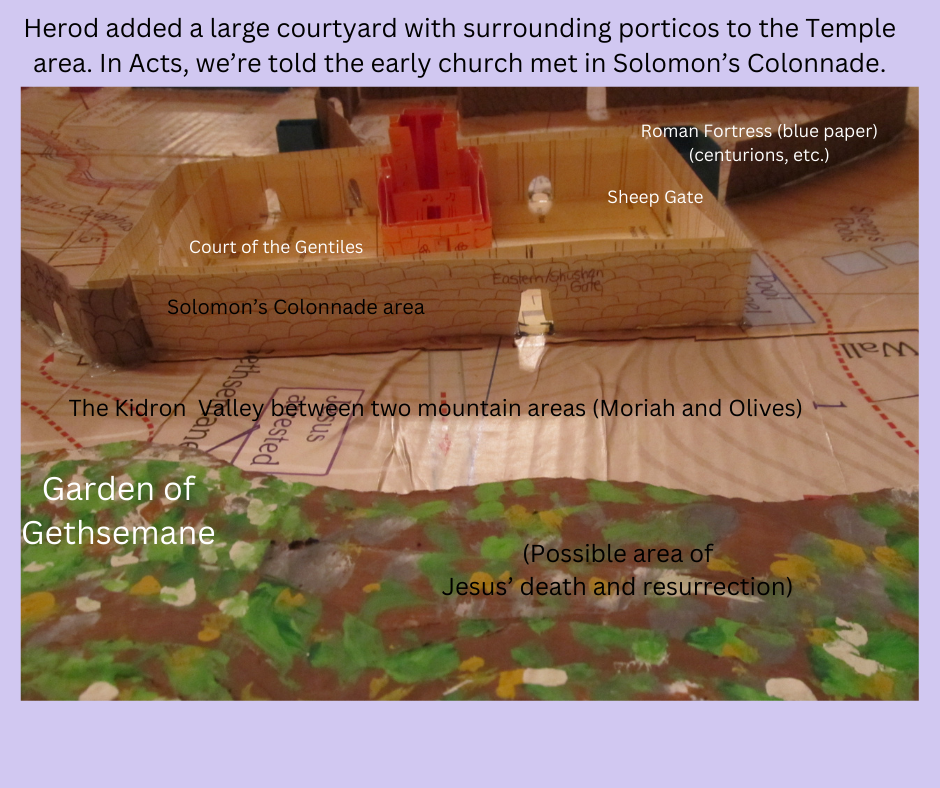
Guzik’s commentary of Mark 11 continues, “They did [business] in the outer courts of the temple, the only area where Gentiles could worship and pray. Therefore, this place of prayer was made into a marketplace, and a dishonest one at that. God intended the temple to be a house of prayer for all nations, but they had made it a den of thieves.”
After cleansing the Temple of the businesses which shouldn’t be in that area, Jesus healed blind and lame people and children repeated songs and shouts of praise, continuing the “Hosannas”!
The chief priests and scribes were very angry.
Jesus left them and went out of the city again to Bethany for the night. (Mark 11:19)
Song Suggestion – My House Shall Be a House of Prayer
Monday – Inspection “Day 1” and Teaching
Matthew 21:18-19 – “Now in the morning as He returned to the city…” (cf. Mark 11:20)
During the few remaining days, Jesus was being inspected by the religious leaders and teaching the multitude and His disciples.
He taught using the fig tree to His disciples about true faith (e.g. Mark 11:20-24).
Jesus was asked “by what authority” (or “who is behind your teaching and actions”) by the religious leaders (chief priests, scribes, and elders).
He spoke in a few parables specifically about them, these religious leaders. And they understood He was speaking against them.
- The parable of two sons (Matt. 21:28-32)
2. The parable of the vineyard tenants (Matt. 21:33-46, Luke 20:9-18. Mark 12:1-12.)
3. The parable of the wedding feast (Matt. 22:1-14)
4. He also quoted from a song sung at Passover. The leaders He referred to were those who were thinking they were the “builders” of God’s coming kingdom yet had rejected the Cornerstone. (A cornerstone is what makes the rest of the building correct so without Him, “what” they were trying to build wasn’t correct.)
Song Suggestion – Jesus is the Cornerstone
Then the religious leaders gathered together to plot how next to inspect Jesus’ teaching.
We’re not told “which day(s)” were “which teachings” or questions discussed. But I’m going to split my outline here.
I’m doing that partly because Luke 20:1 says “On one of those days” and the next section of my outline includes the time when the leaders stopped testing Jesus,
and partly because the Bible speaks about the leaders gathering to discuss what to do so that would take some time. So we should allow a bit of time for that to happen.
Tuesday –
People had opportunity to respond to Jesus and they varied in their responses, which is something we can consider ourselves….. “What is MY response to Jesus?”
- The verses I chose for the graphic above show a couple of the responses. Mark 12:37b gives another (“common people heard Him gladly) and you can find others in these passages too.
Jesus continued to come to the Temple to answer the leaders and to teach the crowds of people who gathered to hear Him (Luke 21:37-38).
- Examples of the continued inspection by the religious leaders who planned carefully together until they didn’t ask Him anymore questions:
- Matthew 22:15-22:46, Mark 12: 13-34, Luke 20:20-40
- Examples of Jesus teaching in the temple
- to the crowds, some of whom were also listening-in on the questions mentioned above –
- Matthew 23:1-36, Mark 12:35-40, Luke 20:41-47
- to God-fearing Greeks at the feast and Jesus’ disciples
- John 12:20-26
- Examples of Jesus teaching His disciples specifically
a. Widow’s offering – Mark 12:41-44, Luke 21:1-4.
b. About the coming destruction of that temple (which happened in 70 A.D.) – Matthew 24:1-2, Mark 12:45-13:2. Luke 21:5-6. (Note: The “Western Wall” of the temple area which remains still today is just a retaining wall of the mount or patio that Herod built around the temple. It isn’t a wall of the Temple itself.)
c. And, away from the temple area while on the Mount of Olives, Jesus taught His disciples about some signs which would precede the time when He will come in the clouds to reign in His kingdom on earth. We sometimes call this the “Olivet Discourse” – Matthew 24:3-26:2, Mark 13:3-37, Luke 21:7-36.
- Re: The Olivet Discourse – Without taking time now to look at the details in these verses, I’ll simply say that, in my view, the context is describes the Tribulation time period, not “signs” needing to be fulfilled before the rapture of the Church.
- The rapture is mentioned at the Last Supper (John 14:1-3) and in the first letter to the Thessalonians.
- But the context in the Olivet Discourse is to Jewish believers waiting for the kingdom of God described as when the Messiah reigns (cf. Zech. 6:12-13, 1:16-17, Psalm 132:13-14, etc.) This kind of earthly kingdom that was promised to Abraham and David, etc. is what the disciples are asking about and so, in context to help them understand more, this discourse was Jesus’ reply.
- If you read the Olivet Discourse in this context, it reads very clearly and isn’t as confusing as some people get into if they read parts of it as if it were signs for the rapture.
Yes, I definitely still believe that the “catching up” of true Christians can happen at any time to be with the LORD forever. But that truth is taught in other places in the Bible.
Broadly of course, yes, we can (and should) pay attention when we see some of these signs happening in “smaller amounts” today because it shows that that time of judgment on this earth is getting closer. Things are falling into place and the stage is getting set for the next period of time.
Then, there was an evening meal at Simon the Leper’s house. Jesus’ head was anointed (Matthew 26:3-13, Mark 14:1-9).
- Some people think this is the same event that looks back to when Mary anointed Jesus’ feet the night before the people waved palm branches in their procession of praise.
- It could be the same – sometimes things in the Bible go back to give more details or a summary or verses to add a thought in a place that isn’t sequential and that’s OK.
- But both Matthew and Mark would be mentioning it then as an after-thought to insert here and the description is also slightly different (although it does have similarities too) so I personally think that this is the second anointing of the week.
There came a final point that week when Jesus left the Temple without returning again.
- John 12:27-50 – I personally think these could have been words spoken by Jesus right near the end of His teaching in the temple area, sort of as a closing plea to the people there.
- See also Matthew 23:27-24:1.
Song Suggestion
Ron and Gary Matthews (brothers whom I’ve heard in concert before) have an interesting song which I think fits well here and in preparing for the next post. It’s called, “My Love Will Never Let You Go.”
“…My love will for you will never, ever end, and I will return someday!”
References:
Please refer to Part 1’s post.